Keep this leaflet. It is a research insert, not a storefront. If you have questions, use the questions pack — not a chat widget.
drughub market onion
Markets talk about coins. This section explains the vocabulary that appears in public reporting about DrugHub for readers who searched drughub market onion and expected a wallet map. It is not a funding tutorial, not a transaction guide, and not legal advice of any kind. The distinction is load-bearing: settlement vocabulary is how this desk describes a reporting convention; settlement instructions are what clones monetize.
Bitcoin's transparent ledger — where all movements are recorded and potentially traceable — is the reason later darknet platforms market Monero's privacy properties as a differentiator. That sentence is a reporting observation, not a recommendation to use any coin. Marketing language about coins is not a chemistry lesson, not a regulatory opinion, and not an investment thesis.
When a blog states XMR only as though it were a verified policy, believe the sentence only as a claim about what circulates in public writing. A signed rulebook from an operator's key would be needed to verify the policy. Unsigned wikis repeat the phrase because it ranks and because it sounds definitive — neither of which makes it a protocol fact.
How drughub tor articles turn protocol into slogans
Child pages under this index remain in the same lane: Monero as discussed in reporting and Bitcoin as the historical contrast. Neither page publishes addresses, recommends exchanges, or lists mixers, because those are the specific elements that convert a vocabulary page into a monetization funnel — which is what clone sites do with settlement language.
Public drughub tor explainers regularly collapse protocol properties into slogans: ring signatures become untraceable, stealth addresses become invisible, RingCT becomes a magic shield. These compressions are memorable and almost always inaccurate at the margins. Academic documentation describes strong default privacy properties; it does not describe immunity from every investigative method, and the distinction matters when a slogan is being used to sell a sense of security.
This desk will not walk through how to construct, broadcast, or verify a coin transaction. Those tutorials belong to wallet documentation and protocol sites. Practice on a clone — rather than on those primary sources — is how people lose value to theft patterns that depend on the user not understanding what they are doing.
Why drughub darknet histories contrast ledgers
The drughub darknet settlement narrative tends to follow a two-act structure: act one establishes early platforms on a public ledger that later proved traceable, act two introduces a private rail as the solution. The structure is historiography; it is useful as context for understanding why privacy-coin marketing resonates in this niche, and it is potentially harmful when the narrative becomes a shopping argument rather than a historical observation.
Exit scams in this industry do not happen only at the key layer. Finalize-early pressure campaigns and fake dispute resolutions are social engineering — they work because they exploit procedural expectations rather than cryptographic weaknesses. A multi-signature slogan does not make dispute outcomes honest, and a privacy rail does not prevent an operator from disappearing with custodied funds. See escrow claim for the vocabulary around those failure modes.
If any page — clone or otherwise — demands a fresh address delivered by email, treat that as a classic theft pattern: the address belongs to whoever sent the email, not to the platform. This leaflet will not help complete that pattern. It will only name it, because naming it is the only defence available from a static cream page.
What would actually verify a coin policy?
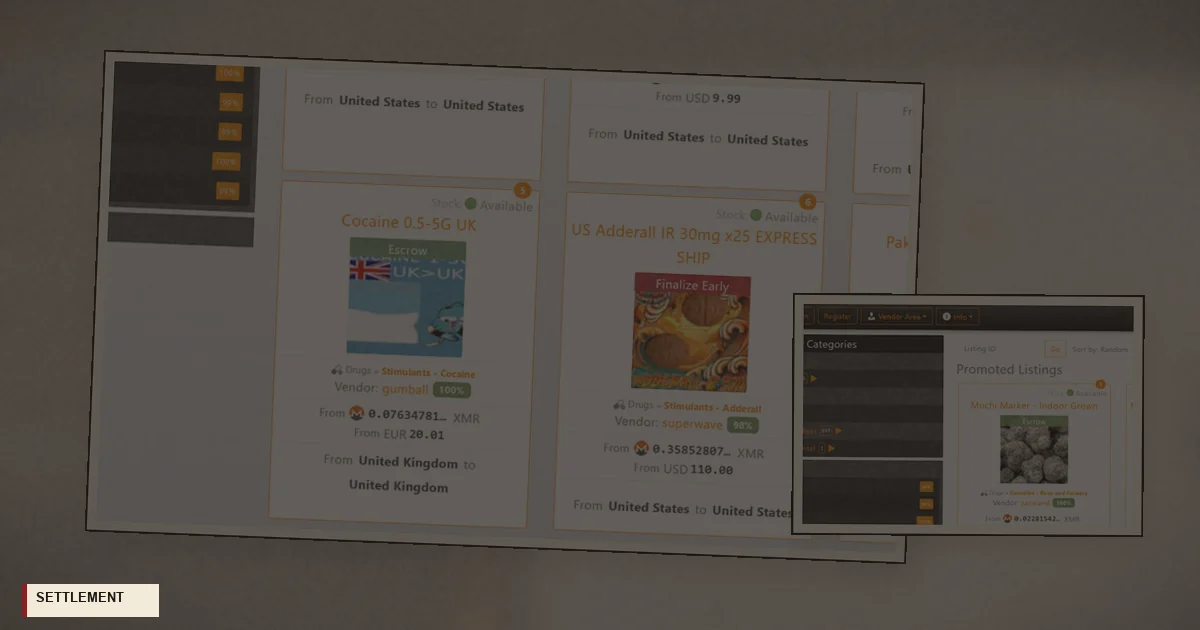
Mid-section note: coin talk around a drughub market onion brand is still talk, and policy claims require signed rulebooks rather than wiki consensus. Screenshots of a drughub marketplace checkout interface are chrome exhibits, not rulebooks — the settlement method displayed on a screenshot may not reflect what the operator actually enforces, what a clone actually accepts, or what a reader will actually experience.
Readers who needed operational instructions should leave this host. The genre is wrong. Readers who needed vocabulary for parsing blog posts, evaluating round-up claims, and identifying when a settlement narrative is being used as bait should continue to the child pages and then stop.
Nothing in this section or its children is legal advice. Possession, transmission, and exchange of digital assets are regulated differently across jurisdictions, and those regulations change. A cream leaflet typeset on 1 Sep 2026 cannot update itself to reflect tomorrow's enforcement actions.
Coin vocabulary is a magnet for operational questions. This section names the magnet and then refuses the questions. Addresses, mixers, and exchange lists are how clones monetize the magnet.
Protocol properties do not belong to a brand. They belong to software many people run. A slogan that privatizes a rail is advertising, not a theorem you can check from cream HTML.
Policy claims need signed rulebooks. Screenshots of checkout chrome are not rulebooks. Icons copy. Keys do not. Email with a fresh address is a theft pattern this leaflet will not complete.
Child pages exist so Bitcoin history and Monero design do not get mashed into one conversion paragraph. Mash is how phishing pages earn trust before the paste.
Nothing here is legal, tax, or investment advice. Local law governs possession and transmission. A package leaflet cannot launder that fact into a shopping reason.
Which settlement questions will this desk not answer?
Does this desk tell readers how to fund an account?
No. Settlement pages record and contextualise how public articles discuss coins in relation to this brand. They do not publish wallet addresses, recommend exchanges, suggest mixers, or provide any step that would constitute a funding guide. The presence of that step on a page claiming to be informational is a clone indicator.
Is XMR only a verified policy?
It is a circulating claim, not a verified policy. Verification would require a signed rulebook obtained from a key you already trusted through a channel established before this search. A wiki repeating the phrase twelve times is not a signature ceremony; it is a popularity contest.
Why mention Bitcoin at all in 2026 notes?
Because older market histories still circulate in 2026 articles and help explain why privacy-coin marketing is positioned the way it is. Providing context for that contrast is not a recommendation to use any coin. A drughub marketplace slogan about coins is still a slogan, regardless of how many articles repeat it.
Settlement language is a magnet for the exact operational questions this publication refuses to answer — which is precisely why clone pages load their settlement sections with conversion copy. This desk keeps the vocabulary and drops the steps, because the vocabulary is how you read blogs and the steps are how you get phished.
If you still need a string, return to mirrors with a signature habit in hand. If you still need a wallet map, you will not find one here. The drughub market onion literature is readable — and worth reading carefully — without a checkout path attached.
1 Typesetting dates on this host are editorial. They are not warrant canaries.
2 Cited v3 names are dated research citations. This domain is not a trust root.
3 Public-health notes are context. They are not a catalogue of listings.