Keep this leaflet. It is a research insert, not a storefront. If you have questions, use the questions pack — not a chat widget.
drughub market onion
When someone types drughub market onion into a search box, what they usually want is a string — a 56-character .onion address they can paste into Tor Browser. What they find is a crowded lane of affiliate sites, spinner articles, and keyword farms all competing to be the answer. This package leaflet is something different: a dated research overlay that records public claims about the DrugHub hidden service, explains why clearnet hosts cannot authenticate v3 keys, and refuses to be a storefront.
The phrase names a Tor v3 hidden service that market trackers still discussed as active through late 2026. A v3 address is a self-authenticating identifier derived from an Ed25519 public key — its cryptographic design means no search engine can certify it, and no cream-coloured webpage can vouch that the string still belongs to the operator who first published it. This desk cites working names with a date and a warning. It does not sell access, process payments, or run the service itself.
If a PGP-signed operator message ever disagrees with anything published here, the signature takes precedence. A clearnet ranking never does.
How drughub tor write-ups recycle the same claims
Public write-ups in the drughub tor lane tend to recycle the same three talking points: v3-only access, Monero-heavy settlement language, and a specialty-shop narrative that suggests legitimacy without demonstrating it. Repetition creates the illusion of corroboration, but SEO farms copy three sentences and ship a new .com — the chorus grows without any new primary ever being consulted.
What a reader can actually check from a clearnet host is narrow. You can count characters in a string. You can refuse any binary that did not come from the Tor Project's official download page. You can compare a published address to a signed document you already held before you opened the search box. What you cannot do is audit listing authenticity, vendor reputation, or escrow honesty from a research page typeset in cream.
This leaflet therefore divides its work across several rooms. A catalog slot for the same query sits at the 2026 darknet-guide overlay, which takes a different editorial posture. The situation briefing holds the claimed-versus-checkable comparison, laid out in the same flat table a doctor's package insert uses for contraindications. The mirrors sheet records the three v3 names this desk currently cites, each with a date. Dossier chapters carry the longer arguments. Nothing here opens a wallet.
Why drughub darknet search results are a phishing surface
Most practical harm in this niche is not a misplaced pixel on a genuine site. It is a tired person pasting a near-string — a homoglyph swap, a prefix-suffix glance — into Tor Browser at two in the morning. The drughub darknet search lane is the industrial delivery mechanism for that mistake, because it aggregates demand from people who have already decided to go somewhere and just need a last step. Clearnet hosts that insert themselves into that last step are either research overlays like this one or phishing surfaces; the difference is not always obvious from the outside.
Indexation by Bing or Google does not resolve the ambiguity. HTTPS padlocks prove that a certificate was cheap, not that a hidden service is genuine or still controlled by its original operator. Pages that shout official, limited-mirror, and connect now use those words because they rank, not because those words have a referent anyone can verify. This publication forbids that vocabulary category for the same reason a pharmaceutical insert forbids the word cure without a study citation.
If you need an operator's word rather than a research desk's best hedged note, stop reading wikis and find a signed text from a key you already trusted through a channel you established before this search. If you cannot find one, you do not have a verified name. That sentence is the whole hygiene lesson; the rest of this leaflet restates it in different rooms so it survives a skim.
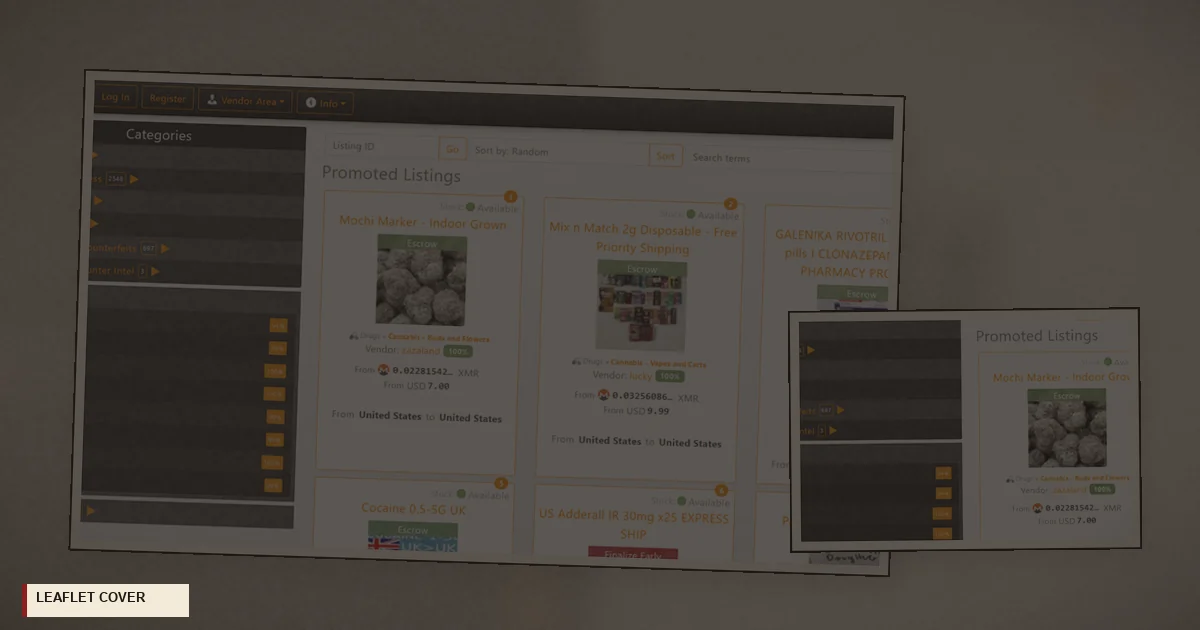
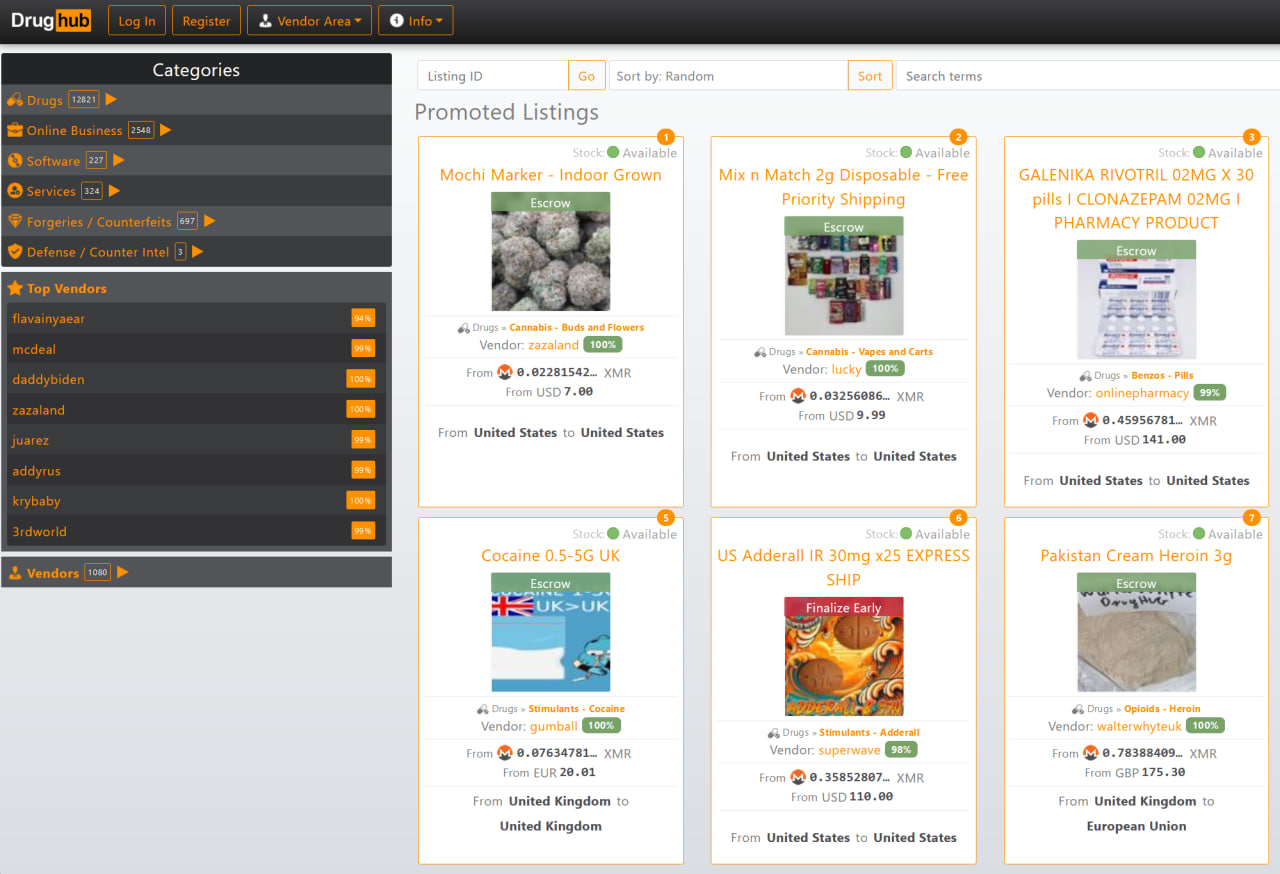
A cloned drughub marketplace theme proves nothing about the underlying key. Screenshots travel across sites with the same ease as a copied CSS file, which means the visual language of a brand is completely decoupled from the cryptographic identity behind it. Treat the exhibit on this page as a still of documented chrome, not as a passport.
Which identifiers does this desk currently cite?
Does a drughub marketplace screenshot authenticate a key?
Working citations dated 1 Sep 2026. Re-verify against a signed source before use. This domain is not a trust root.
- Label 1
http://drughubfjjsmcxqkvqiv5uf4keie7zmenuo7hq5eeqehbc3hnfwojpid.onion - Label 2
http://drughubhpv6trkwm37kfoev4jdsmi4stxicd4sbyluij3mhqw2xjiryd.onion - Label 3
http://drughub4effjetj3rmmicjjfvr3bn6ve7qw5gapjb7bnv5mfkszkvsyd.onion
Three alternate hidden-service names appear in this desk's citation block because operators in this niche commonly publish more than one v3 address simultaneously — so that a single infrastructure outage does not constitute a complete loss of reachability. An undated fourth name pulled from a search result is not part of the set, regardless of how official the surrounding page looks. Compare each full string character by character; length alone is not sufficient.
Mid-body note for readers who arrived directly on the money query: the drughub market onion identifier is a public key wearing a shop label. Brand styling on a screenshot does not bind that key. Themes are copied in an afternoon. Keys are not.
A package leaflet is a brake. It exists so later chapters cannot quietly become a storefront. If conversion verbs appear on this host, treat the page as compromised rather than as a new feature.
Cream stock and a red rule are chrome. Chrome is cheap to copy. The exhibit library is a still of a documented interface, not a passport office and not an access tool. Treat pixels as pixels.
Catalog companions on another host do not baptize a string. They are another overlay with a different IA. In-content links are cross-checks. Footer dumps are a different, noisier pattern this desk refuses.
Public-health context belongs in a different stack from listing banners. This host includes the former so it is not a pure lure page. It will not become a catalogue to earn that inclusion.
If you needed an operator's word, you are in the wrong genre and this cover says so without a countdown timer. Dull limits are the product. Keep reading only if you wanted hygiene notes.
Which questions should a first-time reader ask?
How should a reader treat a new clearnet host that lists onions?
Treat it as an overlay, including this one. Indexation speed, an HTTPS padlock, and a consistent cream theme are not signatures. Compare any string you find here to a signed document you already trusted before this session. Landing pages that demand a download, a Telegram widget, or a chat handshake before revealing an address should be treated as hostile until proven otherwise.
What can this desk verify about escrow or vendor scores?
Nothing cryptographic. Multi-signature stories and five-star ratings are claims printed in HTML. A research leaflet can record that those claims circulate and note what vocabulary they use. It cannot watch keys, audit dispute outcomes, or rebuke fake feedback loops. The escrow chapter in the dossier exists for vocabulary, not for operational guidance.
Where do public-health notes belong on a market-research host?
They belong as context, not as a catalogue entry. Test-kit references, naloxone availability notes, and interaction charts drawn from public-health literature are included so this host is not a pure lure page. They are not product copy, they are not a reason to treat a listing page as a safety guide, and they do not substitute for clinical advice.
Use the rest of this leaflet as a map, not as a storefront. Start at the briefing if you need one page that sorts facts from slogans. Use identifier questions if you only care about string hygiene. The settlement pages discuss why market reporting so often mentions Monero; they are vocabulary sheets, not wallets.
Package inserts are dated desk memos, and they should be replaced when the public facts move. This one was last typeset 1 Sep 2026. If you came here to paste a string and bounce, take the hygiene lesson with you instead: the drughub market onion query is an attack surface, and this host would rather be a dull, explicit overlay than a polished phishing relay dressed in cream.
1 Typesetting dates on this host are editorial. They are not warrant canaries.
2 Cited v3 names are dated research citations. This domain is not a trust root.
3 Public-health notes are context. They are not a catalogue of listings.